
Summer is one of the best things that happens to your mood, but it is also one of the hardest on your skin. Between UV exposure, chlorinated pools, salt water, sweat, and sunscreen buildup, the outermost layer of your skin takes a real beating from June through August. By the time fall rolls around, many people notice their skin feels drier, more reactive, or harder to keep moisturized than it did in spring. That is not a coincidence. It is your skin barrier telling you it needs some recovery.
Here is what is actually happening, and what to do about it as you head into fall.
What is the skin barrier and why does it matter?
Your skin barrier is the outermost layer of your skin. Think of it as a biological raincoat: it keeps moisture inside your body and keeps irritants, bacteria, and environmental stressors out. It is made up of skin cells held together by lipids, also known as fats, that form a protective seal.
When that seal is intact, your skin holds moisture well, feels comfortable, and resists irritation. When it is damaged or compromised, moisture escapes more easily (a process called transepidermal water loss), and your skin becomes more vulnerable to dryness, redness, sensitivity, and flare-ups of conditions like eczema or rosacea.
Summer damages the skin barrier through three main routes: UV radiation, chlorine, and salt water. Most people experience all three.
What does chlorine actually do to your skin?
Chlorine is an effective pool disinfectant, but it is also a harsh chemical that your skin was not designed to tolerate in repeated, prolonged doses. When chlorine contacts your skin, it strips away your natural sebum-the protective oil your body produces-and begins breaking down the lipids that keep your skin barrier strong.
Research shows that regular chlorine exposure harms the skin's protective barrier and causes increased transepidermal water loss. In plain terms: chlorinated water pulls moisture out of your skin and makes it harder for your skin to hold onto moisture afterward.
The effects go beyond just dryness. Scientific evidence links chlorine exposure to irritant contact dermatitis and shows it can worsen existing skin conditions like eczema and psoriasis. For frequent swimmers, or anyone who spent a lot of time at the pool this summer, the cumulative effect on the skin barrier can be significant.
What does salt water do to your skin barrier?
Salt water has a more complicated relationship with skin than chlorine does. In the short term, ocean water can feel clarifying. Its mineral content includes magnesium, calcium, and potassium, which have mild anti-inflammatory properties and can temporarily improve the appearance of acne-prone or oily skin. That post-beach glow is real, at least for a few hours.
But the longer-term picture is harder on your skin. Research has found that exposure to salt water nearly doubles skin stiffness and drying stress compared to fresh water. The salt concentration in ocean water is higher than what your skin cells are used to, so it draws moisture out of your skin's surface layers. Salt crystals left on the skin after ocean swimming continue pulling moisture out even after you leave the water.
Ocean water also has a pH of around 8.1, which is significantly more alkaline than your skin's preferred acidic environment of 4.5 to 5.5. This pH difference temporarily disrupts the skin's acid mantle-the protective acidic film that keeps bacteria in check and maintains the integrity of the barrier. A summer of regular beach days adds up.
How does sun exposure damage the skin barrier?
UV radiation is the most significant environmental factor in skin barrier damage during the summer. Prolonged UV exposure damages the lipids, proteins, and DNA of skin cells through both direct photochemical reactions and indirect damage via inflammation and reactive oxygen species. In practical terms, UV exposure breaks down the structural components of the skin barrier, impairs the skin's ability to retain moisture, and triggers inflammation that disrupts normal barrier function.
Importantly, skin can be UV-damaged without any visible sunburn. Research from skincare specialists confirms that skin can become dehydrated, inflamed, and barrier-compromised after sun exposure, even without visible redness. If your skin has felt tighter, rougher, or more reactive since summer, UV exposure is likely part of the reason, even if you never peeled.
How do you know if your skin barrier is damaged?
Common signs of a compromised skin barrier include:
Skin that feels tight or dry shortly after washing, even when you moisturize
Increased sensitivity to products that never bothered you before
Redness, itching, or a feeling of general irritation
Moisturizer that seems to sit on top of your skin rather than absorbing
Flare-ups of eczema, rosacea, or psoriasis that are harder to manage than usual
Skin that feels rough or uneven in texture
If several of these sound familiar heading into fall, your barrier likely took a hit over the summer and is ready for some recovery support.
How long does it take a damaged skin barrier to repair?
Mild barrier damage, the kind that comes from a normal summer of outdoor activity, typically begins to repair within a few weeks with the right support. More significant damage, or damage in people with underlying skin conditions, can take longer. The key is giving your skin the right building blocks during the recovery window rather than continuing to strip it with harsh products.
What ingredients actually help the skin barrier?
The skin barrier is made of lipids/fats. So the most effective ingredients for repairing it are also fats, specifically those that closely resemble the lipids already present in healthy skin. This is where a lot of conventional skincare falls short: water-based lotions, synthetic ingredients, and detergent-based soaps can all continue disrupting the barrier even when you are trying to restore it.
Some of the most effective barrier-supporting ingredients include:
Tallow: Especially, ethically raised, grass-fed tallow, which is rich in the same fatty acids found in healthy human skin, such as oleic acid, palmitic acid, and stearic acid. Because its composition so closely mirrors the skin's own lipid structure, tallow is absorbed readily and provides the raw materials the skin barrier needs to repair itself. It also contains fat-soluble vitamins A, D, E, and K, which support skin cell function and renewal. Tallow from grass-fed animals, like that used by The Healthy Porcupine, has a higher nutrient concentration than conventional tallow due to the animals' diet.
Fatty oils: Oils high in oleic acid, like sunflower oil, help replenish the lipid layer without clogging pores or creating a heavy residue. We use high oleic unrefined sunflower oil in our tallow balms for this reason.
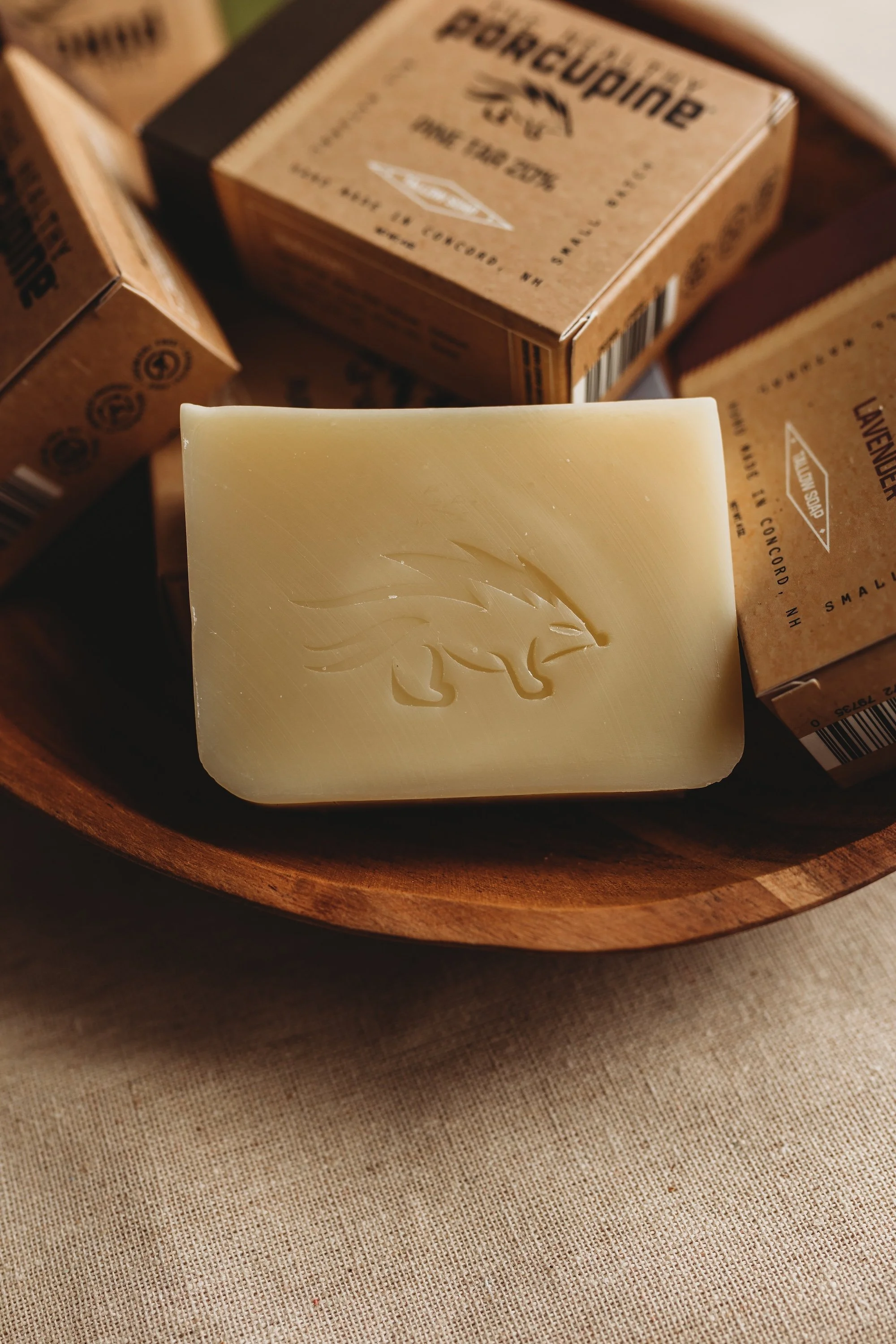
Avoiding stripping cleansers: One of the most important steps in barrier repair is switching away from sulfate-based soaps and synthetic detergents that continue to strip the skin's natural oils. A tallow-based cold process soap cleanses without removing the lipids the skin needs.
Why does tallow work so well for barrier repair after summer?
Tallow has been used in skin care for centuries, and its effectiveness comes down to chemistry: the lipid profile of tallow is one of the closest natural matches to the lipids found in the skin barrier. Where synthetic moisturizers sit on top of the skin, tallow provides fats it can actually use and absorb without a greasy residue. It typically works well even when skin has become sensitive after a summer of UV and chemical exposure.
What should your fall skincare routine look like after a summer outdoors?
The goal for fall recovery is simple: stop stripping, start nourishing.
Step 1: Switch your cleanser. If you are using a conventional body wash or facial cleanser with sulfates or synthetic detergents, now is the time to switch. A gentle tallow soap cleans effectively without stripping the lipids your skin barrier needs to repair.
Step 2: Moisturize with something your skin can actually use. Tallow balm applied to damp skin after washing locks in moisture and delivers skin-compatible fats that support barrier repair. Start with the face or any area that feels particularly dry or reactive.
Step 3: Keep it simple. A compromised barrier does not need more products - it needs fewer, better ones. Resist the urge to add actives, exfoliants, or new products while your skin is recovering. Give it four to six weeks of consistent, simple care first.
Step 4: Stay consistent. Barrier repair is cumulative. The results build over weeks, not days. Consistent use of a gentle cleanser and a nourishing balm will show more improvement over a month than any single intensive treatment.
Ready to start your fall skin recovery?
The Healthy Porcupine's Pure tallow soap and Unscented tallow balm are soothing, gentle, and made without fillers or synthetic ingredients, just what your skin actually needs.