If you have spent any time in the natural skincare world, you have probably encountered both tallow balm and shea butter as moisturizer alternatives to conventional lotion. Both are natural and are free of the synthetic preservatives and fillers found in most drugstore products. They also have loyal followings and are often recommended for dry, sensitive, or compromised skin.
So, which one is actually better?
The honest answer is it depends on your skin and what you are looking for. But the comparison between the two is worth making carefully, because they are fundamentally different kinds of ingredients. One is animal-based, and one is plant-based, but both have different compositions, textures, and strengths. Here is what you actually need to know.
What is tallow balm?
Tallow is rendered beef fat, specifically, the fat from grass-fed cattle that has been slowly melted down, purified, and cooled into a stable, nutrient-dense ingredient. Tallow balm is simply tallow in a form designed for skincare, often combined with a small amount of complementary oil to adjust texture and absorption.
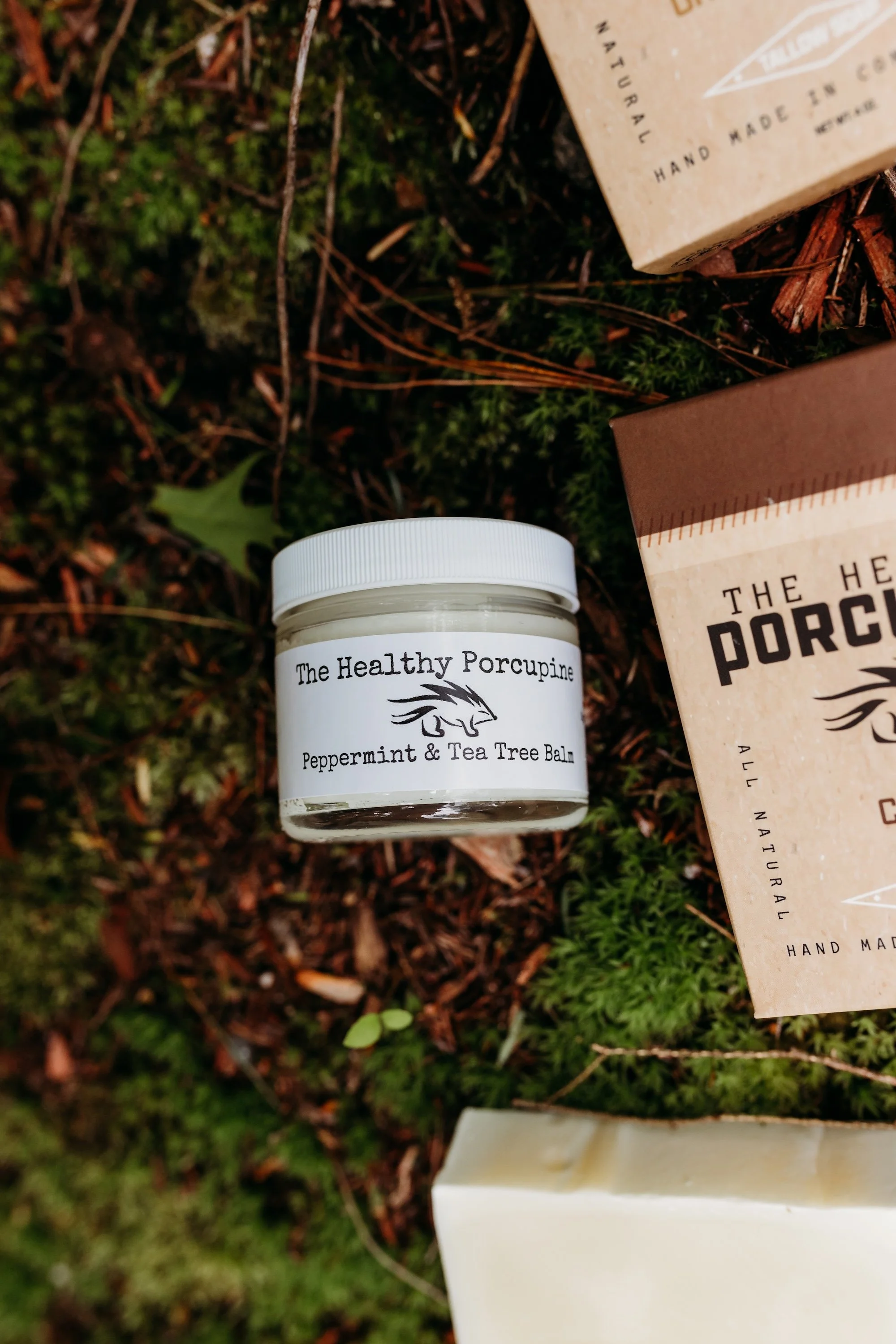
Our tallow balm is made with two ingredients: grass-fed tallow sourced from New England farms and high oleic unrefined sunflower oil. No water, no preservatives, no fillers.
What is shea butter?
Shea butter is a plant-based fat extracted from the nuts of the shea tree, native to sub-Saharan Africa. People have used it in skincare and cooking for centuries, and it remains one of the world's most widely used natural moisturizing ingredients. It is solid at room temperature, melts on contact with skin, and has a mild, slightly nutty scent in its unrefined form.
How do the ingredients compare?
This is where the comparison gets interesting.
Fatty acid profile:
Both tallow and shea butter are rich in oleic acid, stearic acid, and palmitic acid, the primary fatty acids associated with skin nourishment and barrier support. The key difference is in the ratio and origin of those fats.
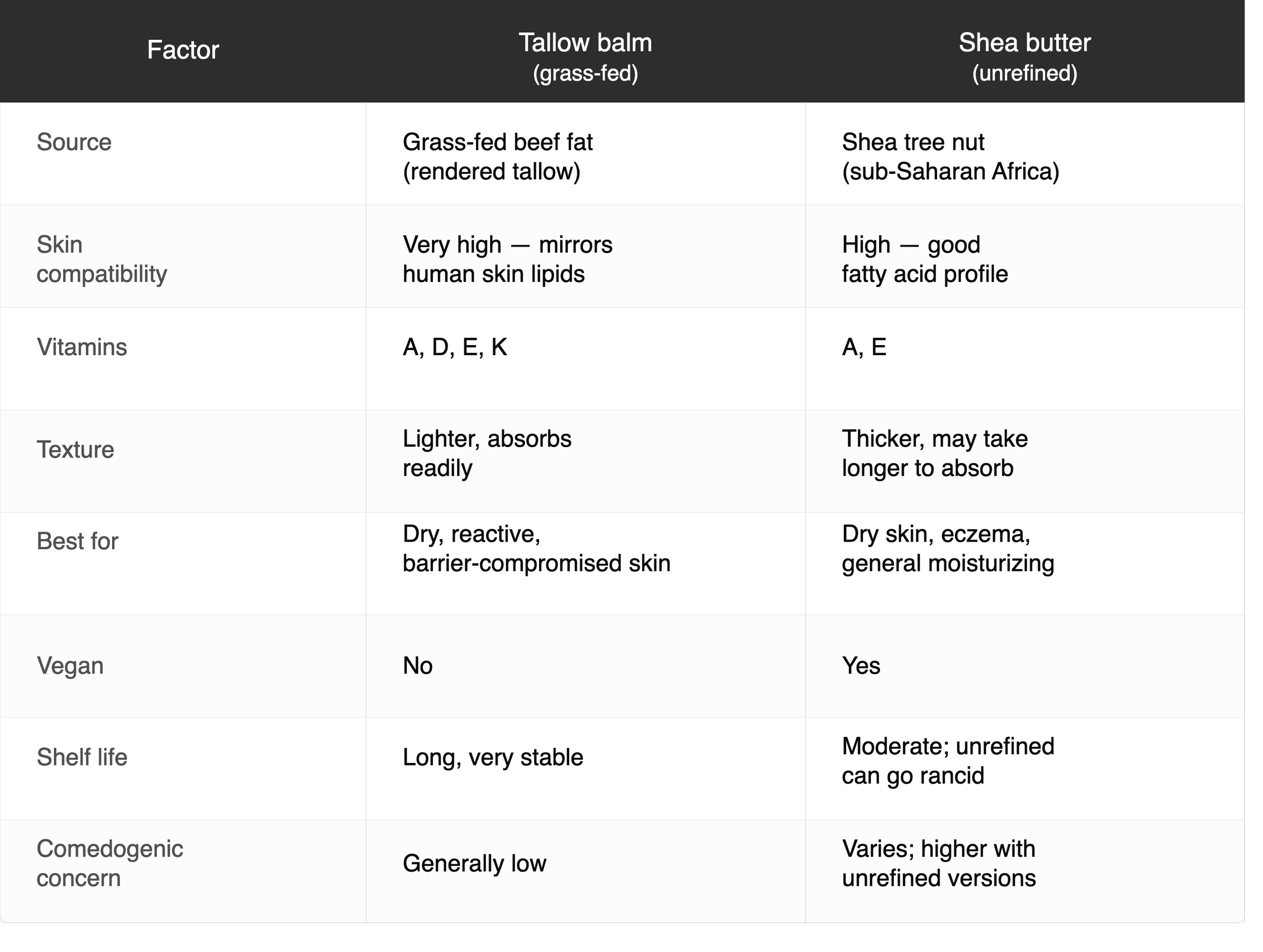
Tallow's fatty acid profile is often described as one of the closest natural matches to the lipids found in human skin, specifically in the stratum corneum, the outermost layer of the skin barrier. Because of this similarity, tallow is absorbed readily and recognized by the skin in a way that many plant-based alternatives are not. Shea butter's fatty acid profile is similar in some respects but comes from a plant source, which means its lipid structure differs from human skin in ways that affect absorption and bioavailability.
Vitamins and nutrients:
Both tallow and shea butter contain fat-soluble vitamins. Tallow from grass-fed animals is rich in vitamins A, D, E, and K, the same vitamins that support skin cell renewal, barrier repair, and protection from oxidative damage. Shea butter contains vitamins A and E, as well as antioxidant phenolic compounds and triterpenes with anti-inflammatory properties. Grass-fed tallow has a higher concentration of these fat-soluble vitamins than conventionally raised tallow, which is one reason sourcing matters.
Texture and absorption:
This is one of the most commonly noted differences between the two. Tallow balm is lighter and more readily absorbed than shea butter, which tends to be thicker and can feel heavier on the skin, particularly in warm weather. Tallow melts easily at body temperature and absorbs without a greasy residue when applied in a small amount to damp skin. Shea butter, especially unrefined, can leave more of a film and may take longer to absorb.
Comedogenic potential:
Shea butter's comedogenic rating is a topic of some debate. Sources vary, and comedogenicity is highly individual; what clogs one person's pores may be perfectly fine for another. That said, unrefined shea butter, with its higher concentration of natural components, is generally considered more likely to cause issues for acne-prone skin than refined shea butter. Tallow, despite being an animal fat, is generally well tolerated by acne-prone skin and is considered non-comedogenic by most who use it regularly. However, as with any ingredient, individual results vary.
Where shea butter has the edge
Shea butter is plant-based, which makes it accessible to people who avoid animal products for ethical or dietary reasons. It is also widely available, comes in a range of price points, and has a long track record in mainstream skincare. Unrefined shea butter retains more of its natural nutrients than refined, and its anti-inflammatory triterpenes make it a genuinely useful ingredient for dry and eczema-prone skin. It is also a good option for people with tree nut allergies who cannot tolerate certain plant oils, although shea itself is a tree nut, so those with nut allergies should check with a physician before use.
Where tallow balm has the edge
The primary argument for tallow over shea butter comes down to biocompatibility. Because tallow's composition closely mirrors the lipids found in healthy human skin, it absorbs more efficiently. It provides the skin with building blocks it can use rather than simply coating the surface.
For people with very dry, compromised, or reactive skin, including those dealing with eczema, psoriasis, or chronic dryness, tallow tends to produce more noticeable results than shea butter, which is why it has become a go-to in the natural skincare community for these concerns. It also contains the full complement of fat-soluble vitamins A, D, E, and K in a form the skin can utilize directly, whereas shea butter offers A and E but not D or K.
Tallow balm also has a longer shelf life than unrefined shea butter, which can go rancid if not stored properly. And because tallow balm contains no water, it requires no preservatives to stay stable, keeping the ingredient list as short as possible.
What about people who avoid animal products?
This is a real consideration and worth addressing directly. Tallow is an animal-derived ingredient, and for people who follow a vegan or plant-based lifestyle, it is simply not an option regardless of its skincare properties. Shea butter is the more appropriate choice in that case, and it is a genuinely good ingredient. The comparison here isn't about one being acceptable and the other not; it is about helping people open to both options understand the real differences.
Overall, both tallow balm and shea butter are solid natural alternatives to conventional lotion. Both are free of synthetic preservatives and far cleaner than most mainstream moisturizers. The choice between them comes down to a few key factors:
If you have been using shea butter and it works well for your skin, there is no reason to stop. But if you have tried it and found it too heavy, not absorbing well, or not making the difference you were hoping for, then tallow balm is a logical next step, and one that many people find outperforms every plant-based moisturizer they have tried.